
Across industries, a structural shift is underway. AI is no longer a technology upgrade, it is a fundamental operating model transformation. Our work with organisations globally shows a consistent pattern: 70–80% of AI value is trapped behind fragmented knowledge and legacy governance; only 10–15% of enterprises have scaled AI beyond pilots; and leaders are widening the gap. This article outlines the new Enterprise AI Operating Model, a five‑layer architecture that enables AI to operate safely, reliably, and at scale.
1. Why Enterprises Need a New AI Operating Model
Most organisations are still applying AI to a legacy structure designed for a different era one built around documents, siloed systems, and human‑only workflows. This model cannot support AI at scale. Three structural shifts are forcing change: AI collapses the cost of system creation; AI requires machine‑readable knowledge; and AI introduces new categories of risk that demand continuous governance.
2. The Enterprise AI Operating Model
Layer 1: Knowledge Layer
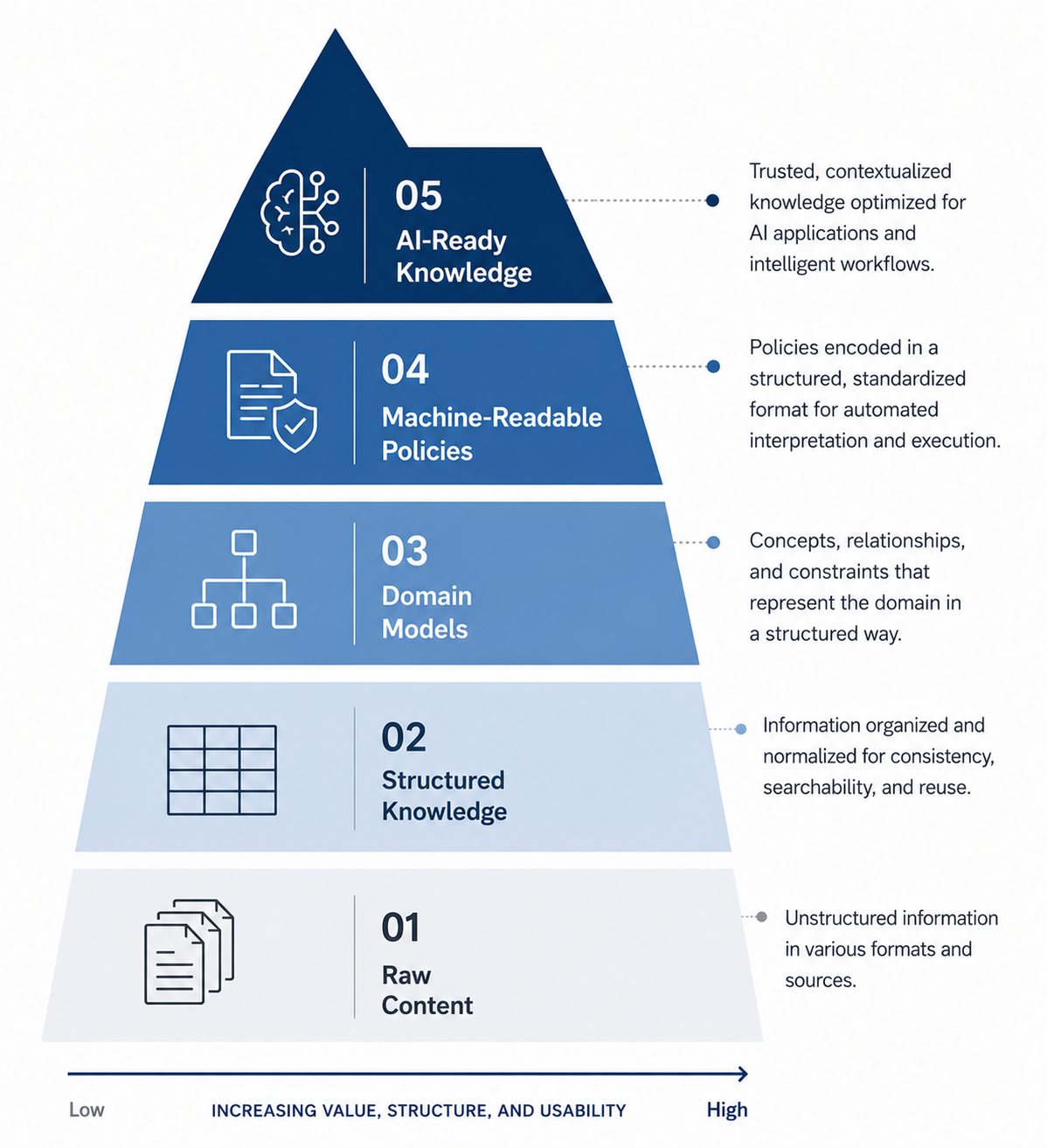
Knowledge Layer: The Enterprise Brain\nAI systems are only as good as the knowledge they can access. Leading organisations are shifting from documents to structured content models, domain ontologies, machine‑readable policies, and versioned operational knowledge. This is where Zakhya provides the unified knowledge foundation.
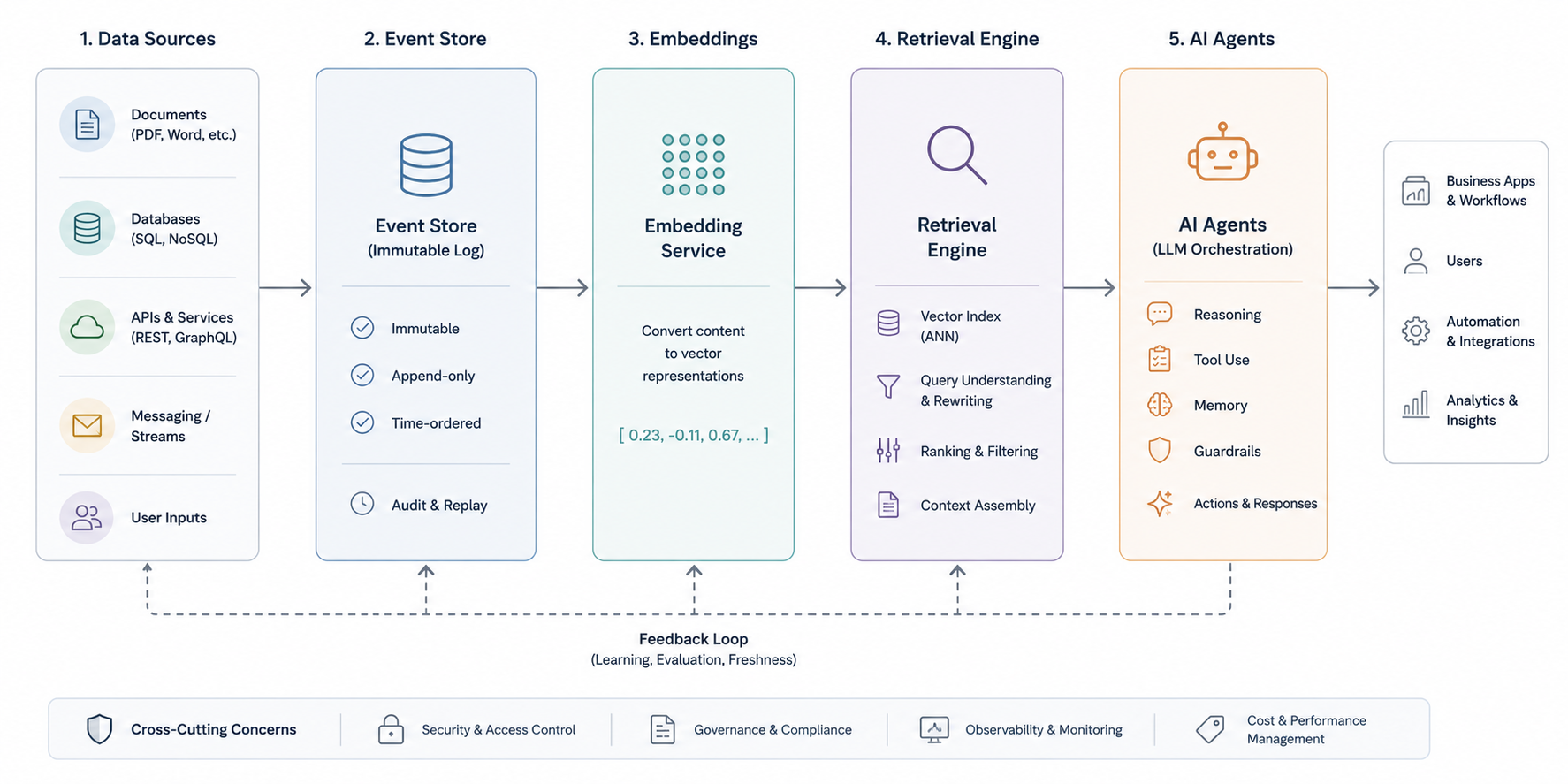
Layer 2: Retrieval & Intelligence Layer: Context Engine\nAI without context is unreliable. Leaders build retrieval layers that integrate event stores, behavioural telemetry, personalisation signals, semantic search, and RAG pipelines. GenRate delivers this contextual intelligence.
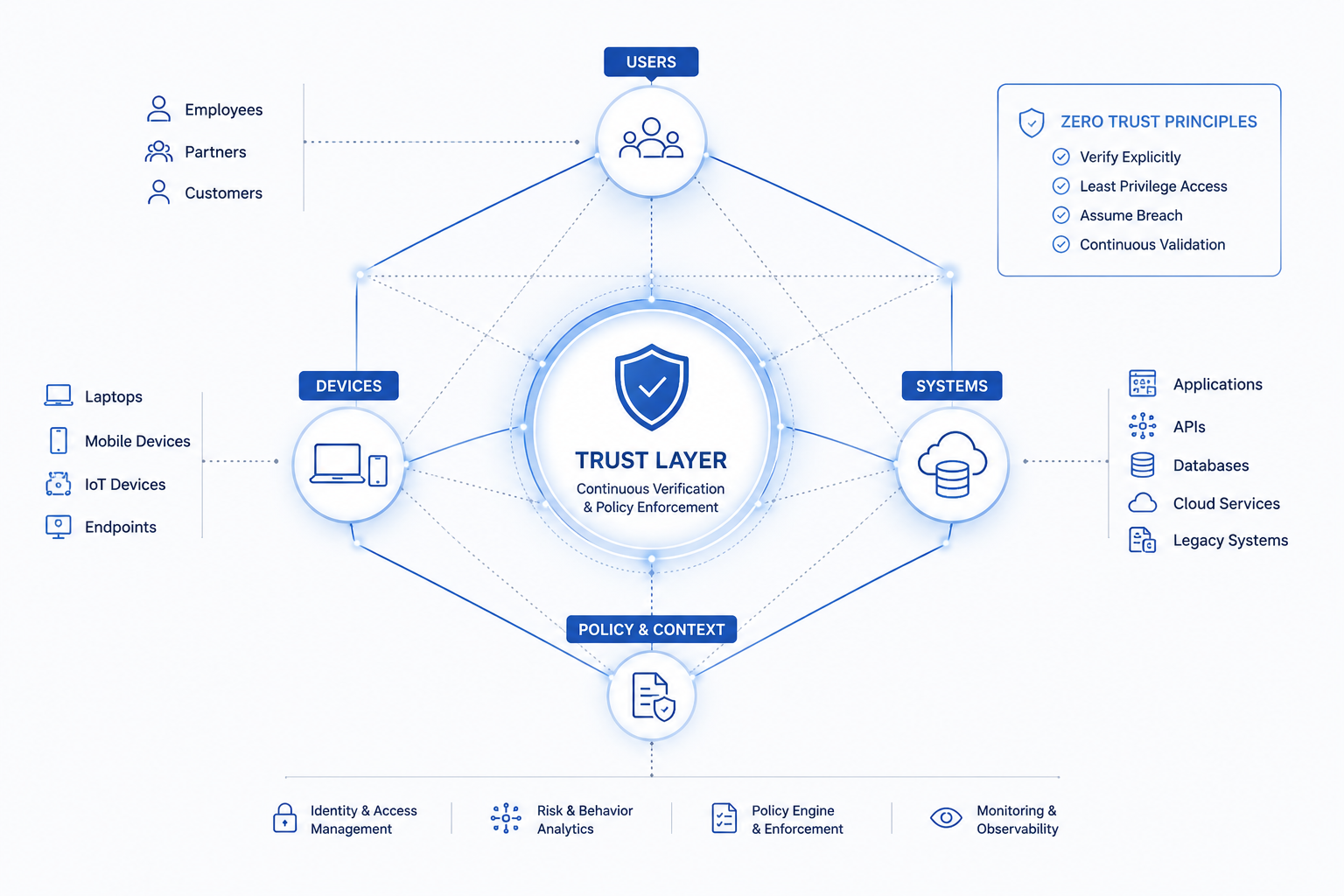
Layer 3 : Identity & Trust Layer: Verification Engine\nAI cannot operate safely without trust. This layer governs user, device, and system identity, verification rules, access controls, and audit trails. Workforce provides this trust fabric
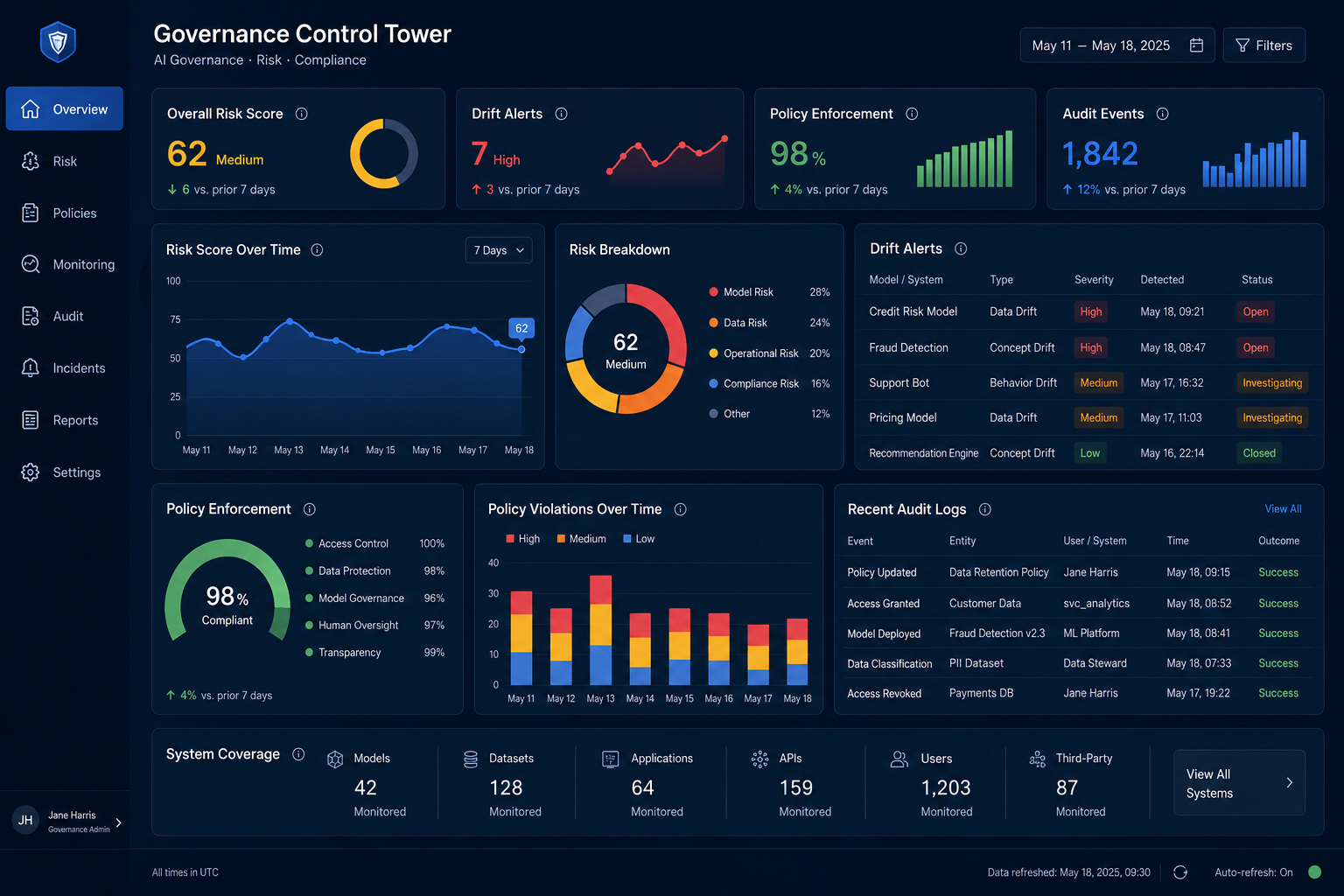
Layer 4: Governance & Safety Layer: Guardrails\nTraditional governance is periodic; AI governance must be continuous. Leaders implement model governance, prompt governance, drift detection, explainability, and automated compliance. Governance becomes embedded, not bolted on.
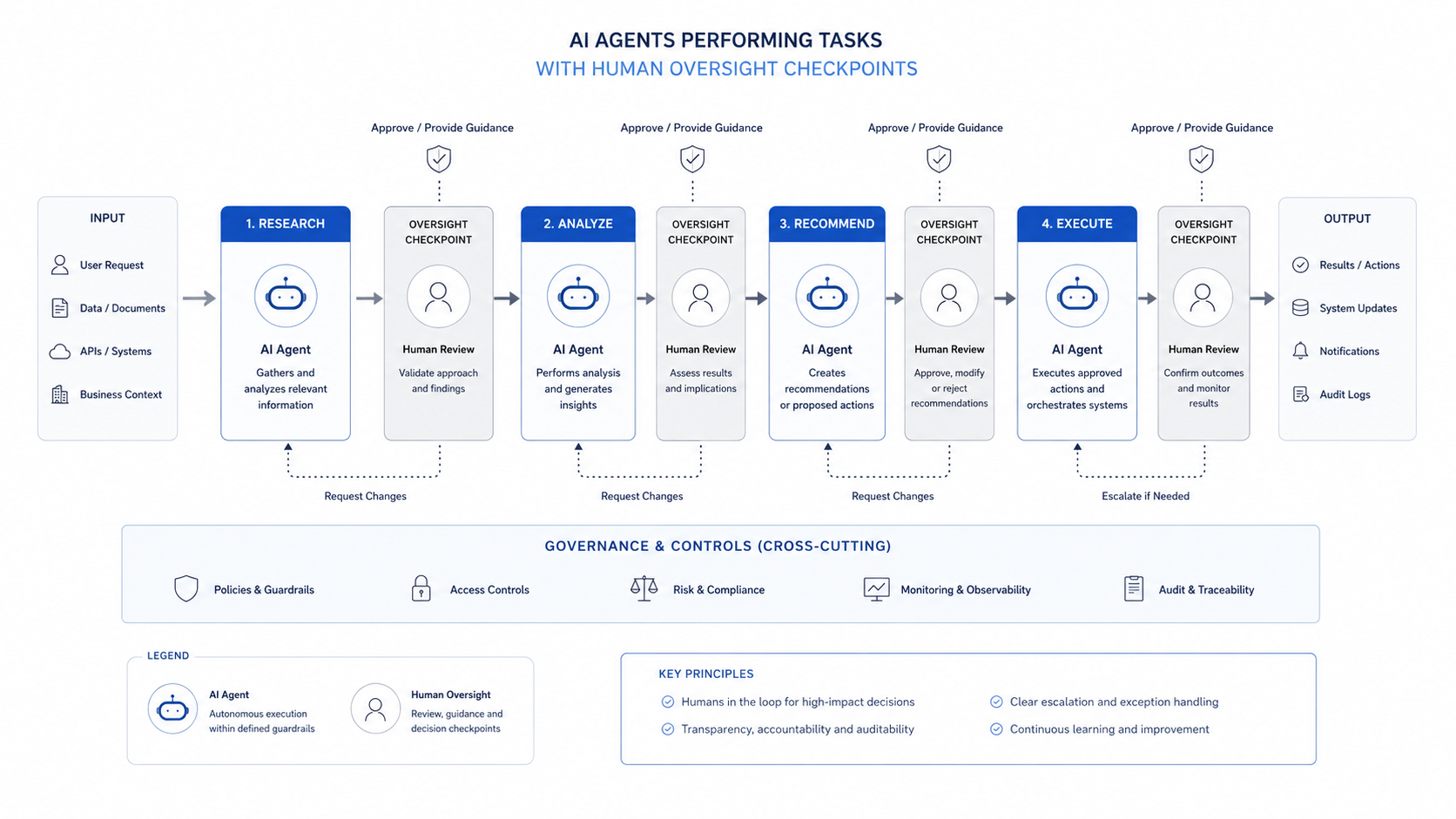
Layer 5: Execution Layer: Agents & Autonomous Workflows\nThis is where value is realised. Leading enterprises deploy workflow agents, coding agents, knowledge agents, and decision agents. The shift is profound: from human‑executed tasks to AI‑executed tasks with human oversight.
3. What Changes in the AI‑Native Enterprise
The operating model transformation touches every dimension: strategy becomes model‑first; technology becomes platform‑based; roles shift to human‑in‑the‑loop supervision; and governance becomes continuous and automated.
4. Adoption Roadmap
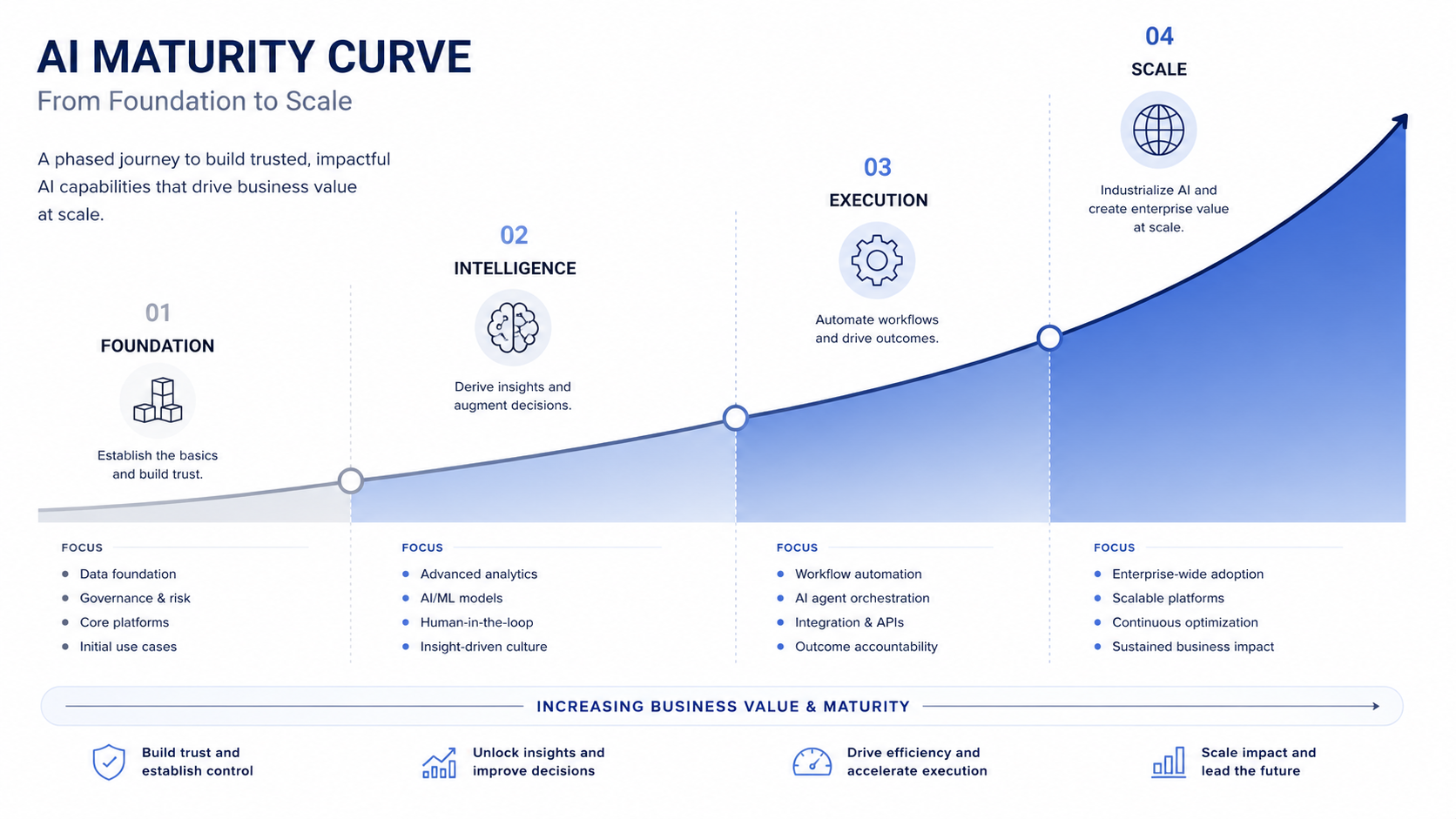
Enterprises progress through four phases: Foundation (knowledge, governance, identity), Intelligence (retrieval, event stores), Execution (agents, automation), and Scale (cross‑domain autonomy and continuous governance).
Conclusion
The enterprise AI operating model is becoming the defining blueprint for modern organisations, together form the architecture of this new model, enabling enterprises to scale AI safely, intelligently, and at speed.
Explore the Zakhya AI Operating Model